Before starting to search for model A or B, think and write down on
paper what your most important criteria are. This will
help you make a more considered decision and feel more
at peace with your choice. The criteria will always be subjective,
but here is a list where you can start. Select the most
relevant to you and add others that seem important.
Driving pleasure
Practicality
Brand prestige
Brand reliability
Aesthetics
As popular wisdom goes, you can't have it all,
so we suggest focusing on 2 or 3
criteria to make your option and establish a hierarchy
among them.
Preferred brands
Models
Body Type
Fuel Type
Colors
Extras you value most
Maximum mileage
Maximum vehicle age
Fuel type
Engine capacity
Co2 emissions
Vehicle age
Don't forget that, when importing a car,
the final cost will depend on how much you will pay in ISV (Vehicle Tax). You can consult our ISV simulator to know how much you will pay when importing a vehicle.
Cost of Ownership
Enjoying a car implies not only the acquisition cost.
There are other costs that are important to consider, which have to do with
its use and ownership.
IUC (Tax)
Although it is called Single Circulation Tax, it is actually a property tax, since it does not depend on how much you drive and you have to pay it even with the car parked in the garage.
Tires and Services
Good tires or a recently performed service at the time of acquisition can easily mean €500 in savings in the first year.
Fuel
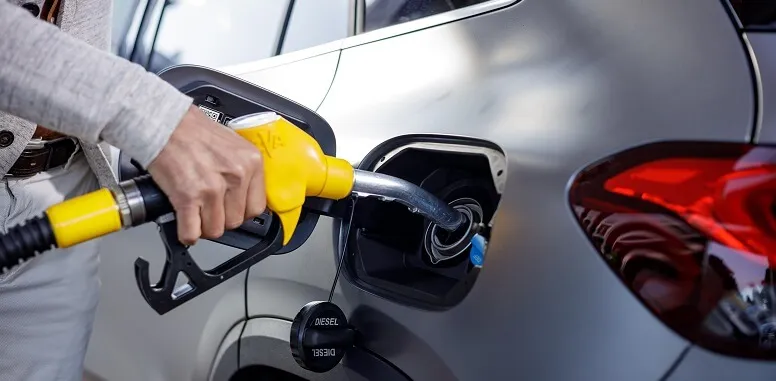
This can be a very significant cost in the total ownership costs and the choice of fuel should be related to the total number of kms and the most frequent daily mileage.
Insurance
What coverage, with or without travel assistance? With or without own damage?
Devaluation
This is a good reason to buy a used car. The greatest devaluation occurs in the first year, either because it applies to the maximum value of the car or because the rate is higher. When you buy a used car, you greatly reduce this cost.
Budget and Credit
Defining a budget is a matter that depends on the economic situation of each person at a given time. But there are two situations that need to be distinguished.
No credit
In this case, everything is simpler and depends on the size of your
wallet.
But even if you have the capacity to buy a car outright,
using your savings, we suggest that you do not fully commit them to the acquisition
of your new car. It might make sense to combine a higher down payment with
credit, preserving liquidity for any unexpected situation.
In this case, there are a set of best practices that should be considered:
Do not commit more than 10% to 15% of the family budget to the
automobile.
Before making the deal, compare different credit proposals.
Ask your bank for a proposal — they already know you and
can make a competitive offer —, but don't hesitate to
ask for other proposals. A good solution might be to use a
credit intermediary, where you can easily get
proposals from different institutions.
When comparing proposals, ensure that you are considering
all charges. What matters is the APR (Annual Percentage Rate)
— a rate that includes interest, commissions, insurance, taxes —
which is what you will actually have to pay every month,
and not the nominal rate — which
only refers to what you will pay in interest.
What term to contract? For the same interest rate, the financial
cost — how much you will have to add to the value of the car to
cover interest, taxes associated with the credit, commissions, and
other contractual costs — will be greater the longer
the loan settlement period.
Therefore, the shorter the term, the lower your costs will be.
Early settlement and its conditions are another of the
variables to consider when choosing your loan. In
some cases, you only pay 0.5% on the outstanding amount
if you anticipate payment. Imagine you are going to receive a
significant amount in, for example, 12 months. It might make
sense to negotiate a longer term to support
lower monthly payments and anticipate the payment at the end of
12 months.
The Best Deal
The car market (particularly in Northern Europe and Germany,
where the vast majority of imports come from) is very
rigorous, and best practices are the rule. But even so, there are
some precautions to take.
Always be suspicious of deals that are too good to be true.
Choose dealerships with good or very good ratings on
platforms and social media (>4.5/5.0).
Choose dealerships with a relevant number of reviews. Ten or 20
ratings can be easily manipulated.
Choose dealerships that did not just arrive on the market yesterday.
Choose dealerships that are used to dealing with exports and
that — unless you speak German or hire a translator — speak
a language you are comfortable with properly.
Do not negotiate with a dealership that refuses to answer a question
in writing, send a specific picture you ask for, or
make a video call near the vehicle.
Vehicle Condition
It is important to remember that you are not buying a new car
and that the photos often overemphasize the
defects. The idea here is that you won't be surprised when
you receive the car and, if fair, you can get some price revision.
Of course, if you choose our turnkey service, we ask these and all questions for you.
If the vehicle you choose to purchase lacks a CoC, you can buy it here. Don't forget to try to negotiate this value with the seller.
Vehicle Negotiation
The car market in Northern Europe is not very susceptible to
negotiation, and for good reasons. They are normally very
transparent regarding the vehicle's condition and, therefore, hold a
secure position regarding the fairness of the asking price. Besides,
since it's a very competitive market, the prices are already
quite compressed.
Even so, based on objective elements of the vehicle condition evaluation, you can get some price reduction, but don't count on huge
discounts.
If you want to leave this to professionals, it's very simple: you
always have our turnkey service available.
Transport
You can, of course, choose to drive your vehicle yourself or
hire a driver. But, if you choose to hire a transport service,
be very careful when choosing the service provider.
I will hire a service
I will drive the vehicle
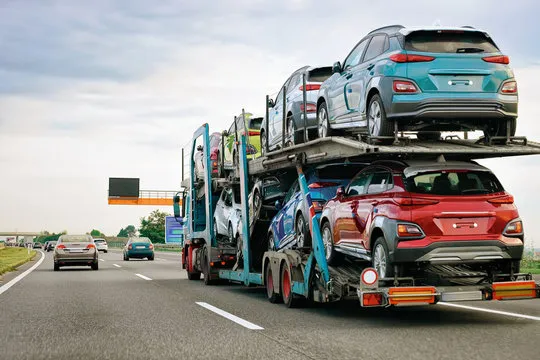
If you choose to hire a transport (which we recommend),
there are some precautions to take. Do not be impressed only by
the price. There are very different companies on the market, offering
very different levels of service and reliability.
If you are going to drive the vehicle, consider at least the following
components below.
I will hire a service
What is the size and age of the fleet?
So your car arrives without incident...
What is the cargo insurance coverage?
The vehicle is already yours, and so is the risk.
How soon will you get the transport?
Having the car paid for, but the shipment successively postponed, is not
a situation you certainly want to be in.
Do they offer home delivery?
If not, where are the warehouses located?
Will they transport the car to an inspection center, so you
can have it inspected right away for legalization purposes?
I will drive the vehicle
Temporary license plates and insurance
If you deal with a dealership experienced in export, they
handle this for you. If not, try to have everything prepared from
Portugal to avoid staying an extra day on the trip.
Travel to the country of purchase
Travel to the seller's facilities
Stay of 1 or 2 nights
Depends on the distance to cover to return.
Fuel
Tolls
Meals
Legalization
Legalizing an imported car is not complex, especially if it's from
a European Union country. Things get more complicated if it's from a non-EU country
or a car prior to 2007 or without a COC.
Here you will find the basic steps to take to legalize an imported vehicle
from an EU country with a registration date after 1998.
Obtain the national homologation number
a) At IMT (in person or online)
b) Needs COC (exceptions may apply)
1
Perform the inspection to assign license plates
a) Vehicle Inspection Center
(category B, which are the ones enabled for this type of inspections)
b) You must request the filling out
of Mod 112, also known as yellow sheet, as well as the certification
of model 9
2
Fill out Customs Declaration and pay ISV
a) At the Customs Portal
b) Get the settlement guide and pay the ISV
3
Deliver documentation to IMT
a) At an IMT branch
b) Deliver:
Prior Booking
Model 9
Original Documents from the Country of Purchase
Copy of DAV
Copy of Model 80 (if exists)
Model 112
Homologation Inquiry
Copy of COC
Copy of Invoice or purchase contract
Copy of ID Card
4
Register the vehicle at the Auto Registry Office
5
Utilizamos Cookies
Este site utiliza cookies essenciais para o seu funcionamento e cookies de análise para melhorar a sua experiência.
Pode aceitar todos os cookies ou escolher apenas os essenciais.
Saiba mais na nossa política de privacidade.